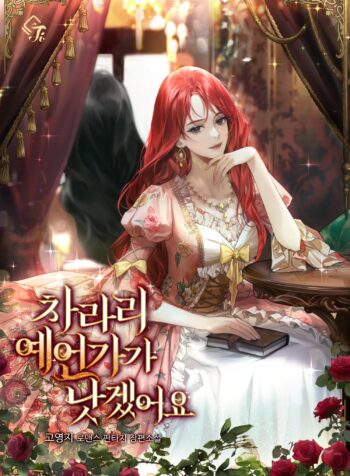
I've Tried Going Back to Life After Dying - Chapter 4
From that moment on, everything she saw was a series of jarring contrasts.
After all, a forty-one-year-old had become sixteen again. A span of twenty-five years had vanished.
That morning, the sight of the servants brought tears to Hildegard’s eyes.
The gardener—alive.
The head chef—alive.
The head maid—alive!
A parade of people who, in twenty-five years, would be long gone. And Hildegard herself—she, too, had died.
Now, everything before her eyes brimmed with life, and every passing second felt unbearably precious.
Looking back, she must have worn such a dreary expression in the marquis’s household.
Unloved by her husband, she had turned it into a twisted strength thinking that no matter what she did, she couldn’t be despised any further. She had even stopped bothering to adorn herself.
Only Austen would say, “Mother, you look beautiful today.” Where had he learned such courtesies? In any case, that boy had been a good child.
“Hmm?”
Lost in nostalgia, Hildegard wandered aimlessly through the mansion from morning, despite having no business there until she spotted something suspicious.
“An unfamiliar servant.”
Her instincts, honed from years of managing the marquis’s household, tingled.
Though, truthfully, she was the one who hadn’t been seen in over two decades. By that logic, everyone here was unfamiliar.
But Hildegard’s senses were as sharp as an insect’s antennae. She stared at the woman for a long moment before murmuring with an air far beyond her sixteen years,
“Well, I suppose it’s fine.”
And with that, she walked away.
“You’re taking quite a while, aren’t you?”
As a maid combed her hair, Hildegard compared the distant past with the memories from just yesterday.
Was it the volume? Was it because of the volume?
The maid brushed and brushed and brushed, until finally, the perfumed oil brought out a glossy sheen in her hair.
Ah, luster.
Hildegard remembered the luster she had already lost.
That was it. Hair didn’t just thin—it lost its shine, its oils. Vintage was celebrated in jewelry and antiques, but when a noblewoman became vintage, she simply became yesterday’s version of herself.
“My lady, what color ribbon would you like?”
Ribbon? When was the last time she had worn one?
Thinking this, she gave the safest answer: “Blue.”
“Then how about this one?”
Huh? Just how many shades of blue were there? The array of blue ribbons was staggering.
This was undeniably her, yet the frivolity of her sixteen-year-old self felt foreign.
Come to think of it, the wedding ring she had given to Helen had been sapphire. The reason she had reflexively said “blue” was likely because she had spent twenty-two years staring at that sapphire on her ring finger.
“Ah, perhaps not blue after all.”
“Then shall we go with lace?”
For some reason, Hildegard wanted to avoid blue. The quick-witted maid immediately offered another option; quite competent, she thought.
Louise, It’s been so long. Twenty-two years.
Staring at the maid reflected in the mirror, nostalgia welled up inside her.
When she had married into the marquis’s household at nineteen, she had wanted to bring Louise with her. But the maid had resigned, saying, “If the young lady is to be wed, now is the perfect time for me to step aside.”
Now, having regressed to her school days, the Louise in the mirror was even younger than she remembered.
Dying once wasn’t so bad, after all. It made her realize that ordinary days weren’t infinite, they were finite happiness.
Watching Louise’s fingers tie the lace ribbon into her hair, Hildegard thought it had been ages since she had spent such a leisurely morning.
“Oh?”
“What is it, Louise?”
“My lady, your chest has grown again.”
“Huh?”
As the maid fastened the back of her uniform, Hildegard thought this was ridiculous.
Her breasts had only ever had two options: shrink or sag. But of course she was in her growth period now.
“I’ll have the seamstress adjust a spare uniform. Please bear with it just for today.”
“It’s fine. I can manage.”
If anything, she wanted to savor this sensation. The tightness in her chest was nothing short of miraculous.
And so, just by getting dressed, Hildegard fully experienced the gap between her forties and her teens.
Everything was nostalgic, but nothing more so than this.
“Father, Mother. Good morning.”
Ah, her beloved parents and so youthful, too. Thinking back, their lives had been filled with sorrow.
Their daughter, married into what was thought to be a good match, had borne no children in the marquis’s household, and her husband’s love had been stolen by another woman.
Their son, raised with love and care as their heir, had passed away far too soon.
Even among nobles, they had been kind parents.
Thanks to Atrey, who had been adopted at twenty-six, their later years had been peaceful—but still, their lives had been marked by grief.
Now, standing before her parents in their thirties, Hildegard sat at the breakfast table, overwhelmed with emotion.
“Lauren, how are you feeling?”
“I feel light today. No need to worry.”
Lauren answered their mother’s question.
That’s right, there had been days when he couldn’t even come to the dining hall. Days spent entirely in bed.
A family meal together hadn’t been a given in her birth home, it had been irreplaceable.
Bit by bit, her memories returned, and with them, the sensation that the Hildegard from yesterday was fading away.
Hildegard Wall Longfall, the Marchioness of Longfall was shedding her skin like peeling tissue paper.
Hildegard Hastings Radmond.
The young Countess Hildegard had returned to sixteen.
The breakfast, filled with emotion, was warm and nostalgic. And yet, for some reason, the smiling face of her stepson Austen came to mind, and she couldn’t quite forget her husband’s face, either.
“Lord Clifford…”
She whispered her husband’s name softly.
YOU MAY ALSO LIKE